Sanwood, LLC is crowdfunding its launch of Sweet Spot, a smart swing sensor for golf and tennis. Sweet Spot is available for preorder through Indiegogo.com and supporters of the campaign are able to reserve Sweet Spot for $99.95. Sweet Spot was developed by Sanwood, LLC and founded by Dr. Robert (Bob) Woods and Eric Sanchez with development in Santa Barbara, CA and business development in Las Vegas, NV.
Sweet Spot is a smart swing sensor that connects via BluetoothSmart to an iOS or Android app and works with any golf club or tennis racket. The Sweet Spot sensor records data from a golf club and tennis racket, helping players improve their game by gamifying practice and play. Sweet Spot’s Swing Away Activity Games develop a users’ swing and make practice fun through multilevel training games for all ages and skill levels. Sweet Spot’s social integration will allow users to connect with friends on Facebook to challenge, compete, and share accomplishments. The activity games teach the fundamentals of golf and tennis while developing the key skills.
Sweet Spot is the first product from Sanwood LLC, a developer of activity gaming technology. is the technology development company behind Sweet Spot and IoT Skybox. The Sweet Spot sensor records data from a golf club and tennis racket, helping players improve their game by gamifying their practice and play time.
Today’s sedentary technology is adversely impacting the health of our children, but Sweet Spot is part of a movement to change that trend with “internet of things” devices that gamify activity. Activity games, like Sweet Spot, engage users and challenge them by making it fun to learn how to play a new sport. Sanwood incorporated game mechanics to make Sweet Spot challenging for all skill levels and by connecting Sweet Spot to Facebook, players will be able to challenge their friends around the world.
Regarding the crowdfunding campaign, Eric Sanchez, President of Sanwood LLC, said, “We are very excited to be launching on Indiegogo. This is a great opportunity for us to intro the product at a discount and help us finalize our tooling and manufacturing here in the US.”
Register now for preorder notifications by visiting http://gosweetspot.net/preorder. Sweet Spot’s crowdfunding campaign is now live. Contributors that give $99.95 will receive a Sweet Spot sensor and hardware for golf and tennis. To learn more about Sweet Spot, visit www.GoSweetSpot.net.
For Press inquiries, contact Sweet Spot Marketing rmcmanus(a)contentvia.com.
About Sanwood LLC & Sweet Spot
SanWood, LLC is a Nevada-based corporation with software and hardware development in Santa Barbara, CA and business operations at The Integration Center in Las Vegas, NV. Learn more about Sweet Spot at www.goSweetSpot.net.

Showing posts with label Latino Startups. Show all posts
Showing posts with label Latino Startups. Show all posts
Friday, July 18, 2014
Thursday, July 10, 2014
Pioneering Hackathon Event to Accelerate Latino Entrepreneurship Takes Off on the Central Coast of California

SANTA MARIA, CA - July 2, 2014 - Nestled between San Francisco and Los Angeles, Santa Maria is part of a Central Coast hotbed of rising entrepreneurial activity. Set to take place on August 1st - 3rd, Startup Weekend Santa Maria (http://santamaria.startupweekend.org) is aimed at accelerating entrepreneurship in an arena where Hispanics account for 70% of the population.
Offering a dynamic runway for launching new ideas, Startup Weekend Santa Maria brings a robust mix of mentorship, idea generation, unmatched networking, team building, and startup community energy. “Startup Weekend is a legitimate resource for people with ideas and we are delighted to help make this event a reality providing a solid launch pad for entrepreneurship to the local Hispanic business community,” stated Sandra Valdez, Co-Organizer and local business leader.
“This ‘No talk. All action.’ event stands as a true landmark in enhancing the economic vitality of our city and region.”, said Jose Huitron, Co-Organizer and Central Coast Chapter Director of the Latino Startup Alliance. “We are beyond excited to address a growing demand for startup fuel and help share the unmatched excitement of Startup Weekend by hosting an event in Spanish that will foster tangible outcomes and continued momentum.”
To register or attend this event, follow this link Register!
Startup Weekend Santa Maria en Español will take place at MIYB Spaces, the newest coworking facility on the Central Coast.
ABOUT STARTUP WEEKEND
Startup Weekend (http://startupweekend.org) is a non-profit, community-building event that brings together entrepreneurs of different backgrounds, including software developers, marketers, designers, and other enthusiasts throughout the globe. They gather to to pitch ideas, form teams and start companies in just 54 hours. The participants that attend have 60 seconds to make a pitch (optional), the pitches are whittled down to the top ideas, and then teams form around the ideas to come out with several developed companies or projects. Finally, the weekend culminates with demonstrations in front of an audience of judges and potential investors.

Thursday, January 23, 2014
Entrepreneur Series | Q&A with Kevin Hernandez, Founder of RecCheck
Ideas are better served with inspiration. Sometimes on the roller coaster ride of entrepreneurship we need a little bit of motivation and a hard reminder about the possibilities in front of us and the merits of hard work. Kevin Hernandez is the Founder of RecCheck, a mobile application that would allow users to easily set up pick up games with their friends and other players around them. RecCheck is a way for users to discover new parks and players in their area. Following is an interview with Kevin who recently launched a crowdfunding campaign on Crowdismo. (Disclosure: I am a Co-Founder of Crowdismo and huge supporter of Kevin's startup.)
Tell us About Yourself | You have an amazing story.
I was born and raised in the Silicon Valley so I have always had a very strong interest in technology and entrepreneurship. Growing up during the Dot-com Boom, I was always surrounded by crazy ideas that seemed to only work here in the Valley. Additionally, my parents always taught me that hard work pays off and they exemplified this mindset by leading by example. My mother worked her way from the Philippines all the way to the Bay Area where she worked many jobs in order to put me and my sister through school. My father also went through his share of struggles just trying to make his way to the United States. He left El Salvador in the 80s while the country was going through a civil war. He had a vision of raising his kids through education and the right morals. This is why I have such a strong affinity with education and especially schools that teach entrepreneurship. Because of this, I decided to earn a degree in entrepreneurship from Arizona State University where I graduated Magna Cum Laude. After graduating from ASU, I decided that I wanted to further my education and expand my network. That's when I decided to apply to the program at Draper University.
What was it like at Draper University?
Draper University was one of those rare experiences where you feel like you can accomplish anything. Here we were taught to be bold and have radical ideas. But to us, our radical ideas were just "out of the box" solutions to problems that needed innovative thinking. We listened to speakers that changed the world with video games, coached companies into billion dollar successes, had theories of the universe that would make Einstein cringe, and even a founder that sold a company while he was still in High School. Everyone that I encountered at Draper University was like-minded and incredibly talented. This was the first time I felt as if I could really bounce ideas with others in such a welcoming environment. Since this was a boarding school, I was able to form lifelong connections with my fellow classmates and I still talk to a lot of them to this very day. Looking back, I'm incredibly grateful to Tim Draper for putting together such a life changing experience. Here I learned to be brave. Whether it was trying to get a job offer in one day, learn someone's life story, recount my most embarrassing moment to a room of 50+ people, or pitch an idea to a team of investors, I always felt prepared and feel like I can accomplish great things with courage and even a little bit of failure.
If you could lock in the mentor of your choice who would you choose and why?
If I could lock in the mentor of my choice it would be someone that values education and has been surrounded by entrepreneurship. Additionally, I'd like a mentor that knows what it takes to succeed as a startup. This is why I feel blessed to have two mentors that exemplify this with Bill Draper and Bruce Brege. Bill has aided in the success of countless startups and even worked in D.C. as the President of the Export-Import Bank of the United States. Bruce has been my mentor since high school and has always supported my education. With his guidance, I've been able to go through a 4 year university and even start my own company. Bill and Bruce have been tremendous mentors and continue to support me with my endeavors.
Have any tips for other Latinos(as) looking to get into an accelerator?
My biggest tip to Latinos(as) looking to get into an accelerator is to just do something risky and fail while you're at it! Entrepreneurs are supposed to know how to take defeat and dust themselves right off in order to tackle their next challenge. I challenge anyone trying to get into an accelerator to start something. The lessons you gain will far outweigh anything you have to lose. Oh, and it doesn't hurt to be a bit crazy.
What's the idea behind RecCheck?
As someone who loves to play sports and compete against other people, I enjoy hitting up the local court or field to play a game. However, often times I find that there's no one there or no one is willing to play a game. After experiencing this several times I decided to come up with the idea of RecCheck. RecCheck will be a mobile app that lets users discover and organize pickup games around their area. Users can set up a profile according to their favorite sports and difficulty level then challenge players around them, join in on open games, or even create their own events. After a nice run, users can add other players to their network in order to invite them to future games. Also, as a premium feature, players can earn rewards by checking into parks and clocking in their hours. So, the more you play, the more points you get for things like protein shakes, coupons for athletic apparel, sports equipment, etc.
Love it. So this is a mobile startup plat that encourages folks to be active?
Yes, and our motto is actually "Check Into An Active Life" because we feel that it's important to maintain an active lifestyle. We also want to encourage people to get out there and meet local players through the power of pickup games. Often times I'm on vacation and have a hard time finding a basketball court or field. With RecCheck, you'll have the opportunity to look up the closest facilities and even meet new people through games.
Why is there such a need for this type of startup?
There's a need for this kind of startup because people need to get rewarded for the hard hours they put into perfecting their jump shot, practicing their swing, or throwing the perfect spiral. At the same time, sports provide a way for people to work together towards a common goal. With the growing trends in wearable technologies and fitness tracking, we hope to be a part of this wave and move towards a healthier and more active society.
Why did you create a crowdfunding campaign?
I created a crowdfunding campaign because I want to give people the chance to become a part of this whole experience from the beginning. With crowdfunding, I have the opportunity to give any potential backers or users a sneak peek into the whole process of building this app from the ground up. Crowdfuding also gives us the chance to really connect with people that are truly interested in what we're doing.
Why Crowdismo?
I chose Crowdismo because I wanted to reach out to the Latino community. I want to show Latino entrepreneurs everywhere that there is a support system out there that can really make your ideas a reality. I love Crowdismo's mission statement of "Empowering Latino Genius Everywhere" because I do believe that this is the sort of thing that minority entrepreneurs need.
How can folks get involved?
You can get involved by checking out our crowdfunding campaign or checking out our actual site and sharing it with anyone that might be interested. Spreading awareness is the first step towards a successful campaign and we're hoping to get as much exposure as possible! You can also stay in contact by filling out the contact form on our site or by simply liking our Facebook page as well. Thanks for all the support and if you have any questions or want to challenge me to a game then email me at Kevin(at)RecCheckApp.com!
Thanks Kevin! You are an inspiration to us all. Absolutely have no doubts your startup is going places. We can all learn from your hustle. This is the first in a series of Q&A posts with successful and awesome Latino(a) entrepreneurs doing amazing things.
Article by @josehuitron - Entrepreneur. Author of Vista Hispano. Founder of Hub 81. Co-Founder Crowdismo.
 |
| RecCheck Mobile App |
Tell us About Yourself | You have an amazing story.
I was born and raised in the Silicon Valley so I have always had a very strong interest in technology and entrepreneurship. Growing up during the Dot-com Boom, I was always surrounded by crazy ideas that seemed to only work here in the Valley. Additionally, my parents always taught me that hard work pays off and they exemplified this mindset by leading by example. My mother worked her way from the Philippines all the way to the Bay Area where she worked many jobs in order to put me and my sister through school. My father also went through his share of struggles just trying to make his way to the United States. He left El Salvador in the 80s while the country was going through a civil war. He had a vision of raising his kids through education and the right morals. This is why I have such a strong affinity with education and especially schools that teach entrepreneurship. Because of this, I decided to earn a degree in entrepreneurship from Arizona State University where I graduated Magna Cum Laude. After graduating from ASU, I decided that I wanted to further my education and expand my network. That's when I decided to apply to the program at Draper University.
What was it like at Draper University?
Draper University was one of those rare experiences where you feel like you can accomplish anything. Here we were taught to be bold and have radical ideas. But to us, our radical ideas were just "out of the box" solutions to problems that needed innovative thinking. We listened to speakers that changed the world with video games, coached companies into billion dollar successes, had theories of the universe that would make Einstein cringe, and even a founder that sold a company while he was still in High School. Everyone that I encountered at Draper University was like-minded and incredibly talented. This was the first time I felt as if I could really bounce ideas with others in such a welcoming environment. Since this was a boarding school, I was able to form lifelong connections with my fellow classmates and I still talk to a lot of them to this very day. Looking back, I'm incredibly grateful to Tim Draper for putting together such a life changing experience. Here I learned to be brave. Whether it was trying to get a job offer in one day, learn someone's life story, recount my most embarrassing moment to a room of 50+ people, or pitch an idea to a team of investors, I always felt prepared and feel like I can accomplish great things with courage and even a little bit of failure.
If you could lock in the mentor of your choice who would you choose and why?
If I could lock in the mentor of my choice it would be someone that values education and has been surrounded by entrepreneurship. Additionally, I'd like a mentor that knows what it takes to succeed as a startup. This is why I feel blessed to have two mentors that exemplify this with Bill Draper and Bruce Brege. Bill has aided in the success of countless startups and even worked in D.C. as the President of the Export-Import Bank of the United States. Bruce has been my mentor since high school and has always supported my education. With his guidance, I've been able to go through a 4 year university and even start my own company. Bill and Bruce have been tremendous mentors and continue to support me with my endeavors.
Have any tips for other Latinos(as) looking to get into an accelerator?
My biggest tip to Latinos(as) looking to get into an accelerator is to just do something risky and fail while you're at it! Entrepreneurs are supposed to know how to take defeat and dust themselves right off in order to tackle their next challenge. I challenge anyone trying to get into an accelerator to start something. The lessons you gain will far outweigh anything you have to lose. Oh, and it doesn't hurt to be a bit crazy.
What's the idea behind RecCheck?
As someone who loves to play sports and compete against other people, I enjoy hitting up the local court or field to play a game. However, often times I find that there's no one there or no one is willing to play a game. After experiencing this several times I decided to come up with the idea of RecCheck. RecCheck will be a mobile app that lets users discover and organize pickup games around their area. Users can set up a profile according to their favorite sports and difficulty level then challenge players around them, join in on open games, or even create their own events. After a nice run, users can add other players to their network in order to invite them to future games. Also, as a premium feature, players can earn rewards by checking into parks and clocking in their hours. So, the more you play, the more points you get for things like protein shakes, coupons for athletic apparel, sports equipment, etc.
Love it. So this is a mobile startup plat that encourages folks to be active?
Yes, and our motto is actually "Check Into An Active Life" because we feel that it's important to maintain an active lifestyle. We also want to encourage people to get out there and meet local players through the power of pickup games. Often times I'm on vacation and have a hard time finding a basketball court or field. With RecCheck, you'll have the opportunity to look up the closest facilities and even meet new people through games.
Why is there such a need for this type of startup?
There's a need for this kind of startup because people need to get rewarded for the hard hours they put into perfecting their jump shot, practicing their swing, or throwing the perfect spiral. At the same time, sports provide a way for people to work together towards a common goal. With the growing trends in wearable technologies and fitness tracking, we hope to be a part of this wave and move towards a healthier and more active society.
Why did you create a crowdfunding campaign?
I created a crowdfunding campaign because I want to give people the chance to become a part of this whole experience from the beginning. With crowdfunding, I have the opportunity to give any potential backers or users a sneak peek into the whole process of building this app from the ground up. Crowdfuding also gives us the chance to really connect with people that are truly interested in what we're doing.
Why Crowdismo?
I chose Crowdismo because I wanted to reach out to the Latino community. I want to show Latino entrepreneurs everywhere that there is a support system out there that can really make your ideas a reality. I love Crowdismo's mission statement of "Empowering Latino Genius Everywhere" because I do believe that this is the sort of thing that minority entrepreneurs need.
How can folks get involved?
You can get involved by checking out our crowdfunding campaign or checking out our actual site and sharing it with anyone that might be interested. Spreading awareness is the first step towards a successful campaign and we're hoping to get as much exposure as possible! You can also stay in contact by filling out the contact form on our site or by simply liking our Facebook page as well. Thanks for all the support and if you have any questions or want to challenge me to a game then email me at Kevin(at)RecCheckApp.com!
Thanks Kevin! You are an inspiration to us all. Absolutely have no doubts your startup is going places. We can all learn from your hustle. This is the first in a series of Q&A posts with successful and awesome Latino(a) entrepreneurs doing amazing things.
Article by @josehuitron - Entrepreneur. Author of Vista Hispano. Founder of Hub 81. Co-Founder Crowdismo.
Wednesday, December 11, 2013
Sony Electronics Inc. and CHISPA To Host "Latino iConnect" a Digital Marketing Conference in San Diego

Sony Electronics Inc. and CHISPA To Host "Latino iConnect" a Digital Marketing Conference in San Diego
The Hispanic Chamber of E-Commerce encourages business owners and entrepreneurs to attend the Latino iConnect Conference on February 26, 2014 in San Diego, California. The impressive event will be hosted by Sony Electronics Inc and the CORE Hispanic Sony Professional Alliance (CHISPA).
The digital marketing conference will be held on February 26th, 2014 at Sony’s corporate building in San Diego, California and will highlight the latest in internet marketing trends and best practices. Tayde Aburto, Founder of HISCEC said of the conference “It's an honor to work with CHISPA at Sony to organize Latino iConnect. The conference will help small business owners and professionals make the most of their time and resources through the Internet marketing tools that are so necessary in today’s competitive marketplace. Without the integral knowledge the conference will impart, it’s so much more challenging to take a company’s marketing efforts to the next level.”
Speakers for the event include Ramon de Leon who is a social media visionary and a global keynote speaker with a focus on inspiration. Additionally, Neal Schaffer a social media strategist, consultant, and the author of “Maximize your Social” will speak at the event. The founder of the AdAge Top 100 Global Marketing Blog “Maximize Social Business” is also a Forbes Top 50 Social Media Power Influencer. In the following days more speakers are going to be announced.
Topics addressed at the Latino iConnect Conference in late February will be Advanced Strategies to Content Marketing, How to Boost Engagement on Facebook, Google+ for Business and Twitter Tactics and Strategies. Other engaging topics include LinkedIn for Lead Generation and Networking as well as Visual Storytelling via Instagram and Vine. Careful to offer a broad range of subjects the conference will also tackle YouTube Marketing for Small Businesses and Blog Monetization Strategies among various other needful topics.
Latino iConnect is supported by several organizations such as the Oceanside Chamber of Commerce, CANIETI, University of San Diego, San Diego Red, Crowdismo and many more.
For more information about the Latino iConnect Conference visit http://www.latinoiconnect.com. For more information about the Hispanic Chamber of E-Commerce visit http://www.hiseb.com. If you are interested in exhibiting or becoming a sponsor please contact Tayde Aburto at (858) 768-2483 or via e-mail tayde.aburto[at]hiscec.com
Wednesday, November 20, 2013
Latino Startups to Watch in 2014
In this third post in a series on Latino startups, Oxford SBS Seed Fund co-founder Mark Hand highlights the Latino market startups on the path to startup success. Check out the first and the second posts in the series, too.
When Peter Wilkins of New Futuro set out to raise a round of venture capital this year, he found very few investors that understood his target market: US Hispanics. In the VC community, he still says, "there is no one that I know of focused on Hispanic market companies."
That lack of understanding on the part of investors hasn’t slowed down New Futuro. Through its events, resources, and online community, New Futuro now provides educational advice and material it says reaches millions of Hispanics every year. In the footsteps of companies such as HolaDoctor, Xoom, Progreso Financiero, and Consorte Media, New Futuro is part of a new crop of Latino market startups that are raising cash, building teams, and charging into the Latino market.
The most active sector for Latino market startups is financial services. Regalii, led by Wharton MBA and Echoing Green Fellow Edrizio de la Cruz, follows in the footsteps of iSend in allowing families to have some a say in the spending of remittances. Currently in beta launch according to its website, Bucks Bill Pay allows customers to pay their bills in cash at local agents. And Juntos Finanzas, a product of Stanford d.school, empowers Latino customers to track their own expenditures by SMS, similar to India-based social enterprise InVenture.
Along with New Futuro, another crop of Latino market startups focuses on education: YogoMe is an educational app with plans to move into language learning. Backed by 500 Mexico City (which announced its new batch of startups just last week), YogoMe is one example of how companies are pulling in resources from both American and Mexican startup ecosystems. Sleek-geek has three educational tablet apps for teachers, and is one of seven companies in the first Manos Accelerator cohort that includes Antonio Altamirano's Interesante. Plaza Familia is another educational venture founded by Latino social media veteran Ana Roca Castro.
Beyond financial services and education, immigration services platform LexSpot has raised over half of its $750,000 convertible seed round. YaSabe, another 500 Startups portfolio company building a bilingual, local search engine, closed a $2.7M funding round in the first half of 2013. AssuredLabor, based in NYC and with operations in Brazil and Mexico, raised $5.5M earlier in 2013 to expand its job-seekers platform.
Keep an eye on these companies in 2014--no doubt at least one of them will soon stand with Xoom and others that have built successful businesses by serving a large and growing US Hispanic market.
Who did we miss? Let us know in the comments.
--
A couple of notes: iSend is a portfolio company of Gray Ghost Ventures, Mark's former employer. Also, thanks to Barney Santos from Gentefy Media for his help in pulling this list together.
Friday, November 8, 2013
Latino Startup Alliance to Host 1st Annual Innovator Summit in San Francisco

The Latino Startup Alliance, created to encourage the inspiration and cultivation of U.S. Latino led technology startup ventures by providing a strong support network of fellow entrepreneurs, investors, innovators, & mentors, is hosting their 1st annual Innovator Summit at the Mission Bay Conference Center in San Francisco.
About the LSA Innovator Summit
The 1st Annual summit in San Francisco that brings together Latino tech entrepreneurs for two days of startup pitches, keynotes, lighting talks, workshops, networking, and the fostering of both partnerships & friendships to help support Latino startups globally.
The LSA Innovator Summit will focus on three principals: Access, Acceleration, and Awareness. This summit will be the catalyst in providing a platform for startups, entrepreneurs, investors, and partners to connect and take action.
The Latino Startup Alliance is holding an open invitation where startups can apply to pitch at the upcoming Innovator Summit.
With a robust set of partners like the Kauffman Foundation, Latinas Think BIG, Lean Startup Circle, and many others, the LSA Innovator Summit is a landmark event playing front and center in today's "Latino Tech Moment."
Registration: http://summit.latinostartupalliance.org/#!/register
Monday, November 4, 2013
Latino Startup Estereobit.tv delivers hip music videos and real-time interaction to musicians and fans of Latin indie music.
Estereobit.tv brings back the nostalgia of watching music videos while using the most up-to-date technology and taking on an international mass appeal.

AUSTIN, TX—Estereobit.tv is an early-stage Latino startup that provides music lovers with a music video jukebox in the cloud. Along with tapping into the deep nostalgia people have of music videos—remembering the heyday of MTV—Estereobit.tv is the trusted source of the latest hits in Latin indie music. Estereobit.tv goes beyond the normal music app by building their collection in the cloud, giving users access to their personal music video collection at any-time and anywhere. Imagine spicing up a dull party by having your music video collection handy online or even from your phone!
“I was tired of the endless Youtube and music blog searches” says Estereobit.tv founder and developer, Ulises Ramirez-Roche. “I wanted to keep track of my favorite artists and watch cool music videos, so I built a music video robot, who lives in the cloud.”
With the limited resources and competition for the limelight, new artists don’t always have a way to reach their audience; Estereobit.tv gives musicians a better platform from which to reach their fan base and easily promote their music to their target market. With a lack of industry attention towards international and Latin music here in America, Estereobit.tv lends itself as a simple and direct distribution channel for Latin music fans around the globe.
“With the growing Hispanic population in the United States, there should be a site or channel devoted to young, hip Latino music” adds Ulises Ramirez-Roche. “A lot of talented Latino musicians go unnoticed because they simply don’t have the resources that American or European artists do.”
Estereobit.tv is a free music app available to users via www.estereobit.tv on their web browsers and mobile devices.
Estereobit.tv features:
About Estereobit.tv:
Founder, Ulises Ramirez-Roche first thought of Estereobit.tv because he missed regularly tuning into a music video channel and saw the need for a promotion source for Latin music in the United States.
AUSTIN, TX—Estereobit.tv is an early-stage Latino startup that provides music lovers with a music video jukebox in the cloud. Along with tapping into the deep nostalgia people have of music videos—remembering the heyday of MTV—Estereobit.tv is the trusted source of the latest hits in Latin indie music. Estereobit.tv goes beyond the normal music app by building their collection in the cloud, giving users access to their personal music video collection at any-time and anywhere. Imagine spicing up a dull party by having your music video collection handy online or even from your phone!
“I was tired of the endless Youtube and music blog searches” says Estereobit.tv founder and developer, Ulises Ramirez-Roche. “I wanted to keep track of my favorite artists and watch cool music videos, so I built a music video robot, who lives in the cloud.”
With the limited resources and competition for the limelight, new artists don’t always have a way to reach their audience; Estereobit.tv gives musicians a better platform from which to reach their fan base and easily promote their music to their target market. With a lack of industry attention towards international and Latin music here in America, Estereobit.tv lends itself as a simple and direct distribution channel for Latin music fans around the globe.
“With the growing Hispanic population in the United States, there should be a site or channel devoted to young, hip Latino music” adds Ulises Ramirez-Roche. “A lot of talented Latino musicians go unnoticed because they simply don’t have the resources that American or European artists do.”
Estereobit.tv is a free music app available to users via www.estereobit.tv on their web browsers and mobile devices.
Estereobit.tv features:
- Presents trendy, curated music video collection and personal playlist built in the cloud.
- Gives users access to their personal collection from anywhere on their mobile devices or web browsers.
- Like videos from a curated video collection and add them to your personal playlist.
- View the latest videos from indie pop artists from Latin America.
- Vote for videos and track the real-time popularity of a video on the ‘Leader Board’.
- Quickly find your favorite videos and add them to your playlist with the quick search feature.
- Currently in development, Estereobit.tv is working on a live Twitter feed for each band, to be displayed on each music video page.
- Also in development, ‘Late Night Channel’ where it displays the top dance music videos and a list of nearby clubs or concerts near the user location.
About Estereobit.tv:
Founder, Ulises Ramirez-Roche first thought of Estereobit.tv because he missed regularly tuning into a music video channel and saw the need for a promotion source for Latin music in the United States.
Saturday, September 21, 2013
The State of Latino Startups: Exploring the Challenges
In this second post in a series on Latino startups, Oxford SBS Seed Fund co-founder Mark Hand explores some of the obstacles that Latino-run and Latino-focused startups face. Read the first post in the series here.
Startup struggles, generally speaking

In nearly one hundred conversations about Latino startups over the last eight months, I’ve also heard and identified a handful of other hurdles specific to Latino startups. Some of them are relevant to Latino founders; others are particular to startups whose primary customers are Latinos.
Latino founders' uphill fight for funding?
Latino founders, just like their non-Latino counterparts, point to the lack of high-risk capital as a significant barrier to the growth of Latino startups. Unlike in conversations with white founders, however, hints at racial bias among funders are pretty common in conversations with Latino founders. Few accuse venture capital investors of outright racism. Instead, they make two arguments. The first, voiced by at least one venture-funded entrepreneur, is that venture investors have the same subconscious racial bias that Chicago Booth researchers discovered among hiring managers in Boston and Chicago. Venture capital (VC) investors retort that if they see a strong team with a good idea in a growing market, they don’t care about someone’s race or country of origin. In fact, Silicon Valley is so dependent upon foreign talent that they now lobby ferociously for immigration reform.The second, related argument is that the nature of many VC investors’ networks is such that black and Hispanic entrepreneurs are excluded not due to racial bias but because of the nature of social networks. In a recent conversation about the opportunity for a Latino-focused startup fund, one VC asked me if I was saying all VCs were racist. “No,” I said, “We’re lazy.” When some VCs proudly trumpet that a resourceful entrepreneur will find the right introduction to them, they are trusting their network to complete the first round of vetting of potential startups. In the aggregate, such a closed-network approach to deal-sourcing means out-of-network ideas are shut out until someone (a “broker” in network theory) connects them.
Before they approach VCs for scale-up funding, however, Latino founders point to another gap in funding. Unlike founders from well-connected, wealthy backgrounds, Latino founders have fewer wealthy friends and family members waiting in the wings to pump $20,000 into their startup. One Latina founder told me that, as the most educated and successful member of her extended family, asking her family for money would be laughable; instead, she is expected to be the one with a steady job providing cushion for everyone else. In this way, Latina founders, already carrying much of the weight of the growing Latino startup community, may be loaded down even more than their male counterparts by familial expectations.
The Latino market: large, nuanced, tough
What of startups that are not run by Latinos but focus on the Latino market? They too, face special struggles both in financing and execution. In seeking financing from VCs, Latino market startups struggle to get attention from investors rightly inclined to fund what they already know--e.g. tech, life sciences, solar, mass market retail, defense. Why educate yourself on a new, unproven market, exposing yourself to even greater risk? The answer, of course, is that not only are Latinos a large and growing group of upwardly mobile young consumers, but they are early adopters of new technologies and bellwethers for shifts in consumer trends; but as Antonio Altamirano points out, this case has yet to be made in a clear and compelling way.Even given funding, Latino-focused startups face a special challenge: the Latino market may be huge, but it is incredibly nuanced and diverse. Most obviously, Latino market startups have to balance the needs of English-dominant and Spanish-dominant customers; the fluently bilingual customer support and content creators required to do this are tough to find and harder to retain.
Yet both Latino founders and those interested in the Hispanic market are plowing ahead. One example of such forward momentum is Manos Accelerator, which has recently accepted their first cohort of Latino startups. In our next article, we’ll take a closer look at a few of the Latinos and Latino-focused entrepreneurs blazing the trail--if you know of a few, send them our way!
Mark Hand (@markchand) is the cofounder of the SBS Seed Fund, a student-run startup fund within Saïd Business School at the University of Oxford. He spent two years with Gray Ghost Ventures investing in early-stage companies in the US and India. Mark is currently researching startups in the US Hispanic market. Photo by Phil Roeder from Wikimedia Commons.
Wednesday, August 21, 2013
Latino Startup Alliance Expands Presence to the Central Coast

Latino Startup Alliance Expands Presence to the Central Coast
Focused on encouraging the inspiration and cultivation of Latino led technology startup ventures
The Central Coast has been very active in the tech ecosystem with recent Startup Weekends being held in Santa Maria, Santa Barbara, and San Luis Obispo. Spanning some of the most beautiful coastline in California from Monterey to Port Hueneme, the Central Coast is home to a vibrant collective of change agents, dynamic entrepreneurs, and forward-thinking educators. Highlighting the Latino entrepreneur and tech community's need for a bigger platform is what a global organization like LSA can provide.
In addition, leading LSA Central Coast's (LSA CC) efforts will be Jose Huitron - Founder of Hub 81 and Co-Founder of Crowdismo, the first Latino-focused crowdfunding platform. Jose has been very active in the local tech community through efforts such as Startup Weekend Santa Maria helping to accelerate the conversation on entrepreneurship and increase startup activity.
"The Central Coast is fast becoming a booming tech and entrepreneurship corridor. An opportunity to help foster increased diversity in tech and entrepreneurship is a welcome challenge. The Latino Startup Alliance brings an important bridge to the region with direct access to Silicon Valley and vital support that will help increase the number of Latinos in tech and entrepreneurship locally." says Jose.
To register for this upcoming event visit: http://latinostartupalliancecentralcoast.eventbrite.com
About the Latino Startup Alliance
LSA launched over a year and half ago and has proudly grown to over 400+ innovators. LSA's mission is to encourage the inspiration and cultivation of Latino led technology startup ventures by providing a strong support network of fellow entrepreneurs, investors, innovators, and mentors. For more information visit: http://latinostartupalliance.org/
###
Monday, August 12, 2013
Where are all the Latino Startups?
We are excited to announce a special segment on Vista Hispano focused on shedding some light on the state of Latino entrepreneurship. Joining us is Mark Clayton Hand, an MBA from Oxford University and a cofounder of the SBS Seed Fund, a student-run startup fund within Oxford's Saïd Business School. Mark brings a unique set of investment perspective to the table and is focused on helping to illuminate the dynamics around the current state of affairs that is the exciting state of Latino startups. A huge shout out to Mark for joining Vista Hispano.
Where are all the Latino startups? By Mark C. Hand
The US Hispanic consumer market is big. Really big. $1.3-trillion-dollars-and-counting big. Major corporations like Best Buy, Yahoo, and The Home Depot are paying attention and have piled in, attempting with varying degrees of success to capture a piece of this large and growing market.
Over the course of the last six months, my colleagues and I have researched the Hispanic market with a specific hypothesis: Given its potential, surely there are dozens of startups launching clever, scalable businesses serving Hispanic consumers. As it turns out, we were (mostly) wrong.
Over a series of posts on Vista Hispano, I’ll discuss three elements of the Latino startup ecosystem: What barriers are blocking the creation of a Latino startup market? What startups are already plowing through those barriers? Where do they find the capital they need to start their business?
First, let’s clear up a bit of confusion about what we mean by Latino startups. When people say Latino startups, they mean one of two things: either startups operated by Latinos, or startups serving the Latino market. And when they say Latino startups, they mean either small companies with huge growth potential, or small businesses. The result is a conversation about four different types of companies, often all in the same conversation.

The vast majority of businesses in the US fit into the bottom half of this matrix. Venture capitalists sometimes derisively refer to these small businesses as “lifestyle” businesses. But they are the blood pumping through the American economy, and Hispanics start such small businesses at a faster clip than non-Hispanics.
These companies are very different than the high-growth entrepreneurs on the hunt for venture capital or private equity investment--the companies we're interested in here. Some of those companies, such as Marc Barros’ Contour, are Latino-owned but not Latino market-focused. Others, like pre-paid phone provider MetroPCS, find success by reaching out directly to Latino customers; but they are not Latino-owned. A handful of companies, such as Alicia Morga’s previous company Consorte Media, are both Latino-owned and Latino-focused.
Why do these distinctions matter? Because each type of business faces unique challenges, taps different sources of capital, hires a different type of employee, and demands a different set of skills. If we want to build a Latino startup ecosystem, driving resources to the entrepreneurs who create value and wealth in the Hispanic community, clarity of conversation is key.
In our next post, we'll take a look at some of the challenges--both real and imagined--faced by Latino startups.
--
Mark Hand (@markchand) is an MBA from Oxford University and a cofounder of the SBS Seed Fund, a student-run startup fund within Oxford's Saïd Business School. He spent two years with Gray Ghost Ventures investing in early-stage companies in the US and India. Mark is currently researching startups and investors in the US Hispanic market.
Tuesday, June 18, 2013
Crowdismo Unveils Pioneering Platform Aimed at Launching Innovative Ideas Throughout the Latino Community
Crowdismo Powering Latino Genius Everywhere via Crowdfunding
Crowdismo Launches Pioneering Platform Aimed at Launching Innovative Ideas Throughout the Latino Community
 |
| The Heartful Giving Project, Crowdismo's first crowdfunding campaign. |
Maintaining an overall positive outlook on the economy and future of America, Latinos are champions of possibility and agents of change placing a priority on collective impact. Crowdfunding is a mechanism of activation allowing today’s tinkerers and inspired inventors an opportunity to launch fresh ideas of global relevance.
Recent data outlines a Latino audience that starts businesses two to three times the rate of non- Latinos. However, access to capital and traditional barriers in the financing sector comprise a serious threat to creativity, invention, and entrepreneurship. Crowdismo hopes to change that by offering a unique bilingual and bicultural online destination.
“It’s imperative that we foster a community of synergy and build both intellectual and financial capital driven by access to powerful economic resources that will enable continued momentum throughout the Latinosphere in the U.S.,” said Jose Huitron, Co-Founder of Crowdismo. “Crowdfunding levels the playing field in an arena where only 1% of VC money goes to African Americans and Latinos.”
On the cusp of a unique opportunity to take idea investment and new venture priority to another level, Crowdismo is aimed at leading the charge in innovation funding, idea powering, and community impact. Crowdismo eliminates barriers to entry by providing a mechanism for collective financing via the collaborative web.
Crowdismo is founded by two individuals with similarly identifying characteristics but diverse and dynamic talents. Together, Jose Huitron and Jose Guevarra comprise a powerful duo combining a robust technology skill-base and integrated marketing communications prowess.
Crowdismo’s mission is to power bold ideas throughout the Latino community across the arenas of culture, education, social impact, entrepreneurship, music, design, technology, and creativity.
Leading the pack of unique purpose-driven Crowdismo campaigns, is the Heartful Giving Project, a crowdfunding project aimed at supporting international folk art by providing a community arts center where local artisans can practice and teach their skills in Sua, Ecuador.
“The Heartful Giving Project is an example of the type of creative and globally relevant projects that we hope to activate and serves as a landmark of hope and possibility.” said Jose Guevarra, Co-Founder of Crowdismo.
ABOUT CROWDISMO
Crowdismo is a disruptive online platform aimed at powering creativity and innovation within the Latino community via modern collective financing known as crowdfunding. As a fresh destination for launching bold ideas, Crowdismo allows individuals to join a groundswell of people driven by inspired genius and help power projects in the areas of education, entrepreneurship, social impact, music, film, technology, and more. For more information, visit http://www.crowdismo.com
Contact:
Jose Huitron
info@crowdismo.com 805.214.8281
###
Monday, April 29, 2013
Meet Cíbola: South Side Chicago's Innovation Center Fueling Diversity in Tech Innovation
Fresh off 54 hours of startup ideation via Startup Weekend Santa Maria, the excitement and energy still remains. Questions arise as to how we can keep the momentum going in the area of moving viable ideas forward. Enter Cíbola, a prime example of a focused collective effort aimed at helping drive the number of everyday innovators. The Rainforest by Victor W. Hwang and Greg Horowitt identifies several important aspects of the 'Innovation Funnel' including:

About Pilsen
Just three miles from downtown, Pilsen has been a port-of-entry community for more than 130 years. The eastern section of Pilsen has attracted been home to artists and galleries for more than 20 years. This arts district, along with the expansion of the nearby University of Illinois at Chicago and is less than five minutes from the Illinois Institute of Technology and Depaul University’s downtown campus.
Why Now?
The Minority Business Development Agency (MBDA) reports that less than one percent of venture capital dollars invested annually has been directed to the country’s 5.8 million minority business owners, who represent 29 percent of all businesses in America. Between 2002 and 2007, the number of minority-owned firms increased 46 percent, compared to 18 percent for all U.S. firms. According to the U.S. Census Bureau, between 2002 and 2007, the number of people employed at minority-owned businesses jumped 27 percent, while job growth for non-minority-owned firms increased less than one percent. The MBDA asserts that closing the funding gap between minority-and non-minority-owned startups, based on the share of the adult minority population, would add $2.5 trillion to the economic output of the U.S. and create 11.8 million new jobs.
Cíbola, a coworking space, aims to create an intimate, engaging environment for entrepreneurs to learn actual lessons from actual experiences. It’s hard to do that with 3,000 people spread out in a giant auditorium at a keynote full of theory and fluff. What we need is an environment of accelerated and directed effort towards product and idea development.
Starting in the mid to late 2000s, hackathons became significantly more widespread, and began to be increasingly viewed by companies and venture capitalists as a way to quickly develop new software technologies, and to locate new areas for innovation and funding. Some major companies were born from these hackathons, such as GroupMe, which began as a project at a hackathon at the TechCrunch Disrupt 2010 conference; in 2011 it was acquired by Skype for $85 million. The software PhoneGap began as a project at the iPhoneDevCamp (later renamed iOSDevCamp) in 2008; the company whose engineers developed PhoneGap, Nitobi, refocused itself around PhoneGap, and Nitobi was bought by Adobe in 2011 for an undisclosed amount.
We need more spaces like Cíbola and innovators to help set the tone for ongoing ideation and exciting entrepreneurship.
Learn more by supporting Cíbola on Facebook and Twitter.
- Ideas
- People
- Entrepreneurs
- Organizations
- Coordinating Infrastructure
Cíbola, founded by Mahrinah von Schlegel and Emile Cambry, Jr., is an interesting example of coordinating infrastructure focused on launching new ideas and lasting companies of all kinds in South Side Chicago.

Cíbola is a hub for startups innovation, collaboration and creativity in Pilsen. Our mission is to help Chicagoans become everyday innovators, solve complex challenges, promote diversity and create a community of support for all of us to build our dreams. Cíbola is dedicated to building companies of all kinds, with a focus on tech entrepreneurship, social enterprise, and growing both Pilsen and Chicago's entrepreneur communities.
About Pilsen
Just three miles from downtown, Pilsen has been a port-of-entry community for more than 130 years. The eastern section of Pilsen has attracted been home to artists and galleries for more than 20 years. This arts district, along with the expansion of the nearby University of Illinois at Chicago and is less than five minutes from the Illinois Institute of Technology and Depaul University’s downtown campus.
Why Now?
The Minority Business Development Agency (MBDA) reports that less than one percent of venture capital dollars invested annually has been directed to the country’s 5.8 million minority business owners, who represent 29 percent of all businesses in America. Between 2002 and 2007, the number of minority-owned firms increased 46 percent, compared to 18 percent for all U.S. firms. According to the U.S. Census Bureau, between 2002 and 2007, the number of people employed at minority-owned businesses jumped 27 percent, while job growth for non-minority-owned firms increased less than one percent. The MBDA asserts that closing the funding gap between minority-and non-minority-owned startups, based on the share of the adult minority population, would add $2.5 trillion to the economic output of the U.S. and create 11.8 million new jobs.
Cíbola, a coworking space, aims to create an intimate, engaging environment for entrepreneurs to learn actual lessons from actual experiences. It’s hard to do that with 3,000 people spread out in a giant auditorium at a keynote full of theory and fluff. What we need is an environment of accelerated and directed effort towards product and idea development.
Starting in the mid to late 2000s, hackathons became significantly more widespread, and began to be increasingly viewed by companies and venture capitalists as a way to quickly develop new software technologies, and to locate new areas for innovation and funding. Some major companies were born from these hackathons, such as GroupMe, which began as a project at a hackathon at the TechCrunch Disrupt 2010 conference; in 2011 it was acquired by Skype for $85 million. The software PhoneGap began as a project at the iPhoneDevCamp (later renamed iOSDevCamp) in 2008; the company whose engineers developed PhoneGap, Nitobi, refocused itself around PhoneGap, and Nitobi was bought by Adobe in 2011 for an undisclosed amount.
We need more spaces like Cíbola and innovators to help set the tone for ongoing ideation and exciting entrepreneurship.
Learn more by supporting Cíbola on Facebook and Twitter.
Wednesday, April 24, 2013
NORTEC Collective and Interesante.com Composing New Technology Tune.

NORTEC collective and Interesante.com composing new technology tune.
Mexico is experiencing an economic renaissance. The country's explosive growth has fueled a new wave of technology startups that are betting on the Mexican market. Interesante.com is one that has been able to fuse culture and technology into a service that allows users to publish, share and discover millions of interests in Spanish and English.
Interesante users are a highly mobile crowd. To support this, we are regularly releasing improved versions of Interesante for iPhone and Interesante for mobile web. Our users can explore different categories, create collections and get recommendations.
Colors, sounds, location, content and type, play a crucial role in the recommendations we serve users and our highly sophisticated algorithms are making this happen. The algorithms work diligently in the background and simplify the user’s actions. We show our users the best content as fast as we possibly can.
Discovering new musical tastes through video
NORTEC Collective, a collective of avant-garde artists in electronic music lead by Ramón Amezcua (Bostich) and Pepe Mogt (Fussible) and twice Grammy nominated artists, are now part of the group of advisors to Interesante. NORTEC collective provides the artistic point of view and opens the doors for up and coming artists to be a crucial part of the discovery engines of the future, where the crowd discovers the hidden gems in platforms like Interesante. Video is key in the discovery of new artists and music and we are committed to taking video discovery to a new level. Interesante has integrated YouTube’s API, enabling video content recommendations
NORTEC and Interesante are working to understand the needs of musicians and solve the problem of how to be discovered among a sea of noise. Interesante wants to let artists and musicians find their core audience and increase the initial engagement by bringing their music directly to them.
Interesante, Inc.
Menlo Park, CA
(650)-799-1592
prensa@interesante.com
Monday, April 8, 2013
Sabio.la Hosting Developer Bootcamps for Women and Minorities
How can we encourage more diversity in the arenas of entrepreneurship and technology? It begins with a sense of identity and community where each of us play an important role in recognizing that talent and possibility know no boundaries. Nobody has a monopoly on good ideas and we must take advantage of opportunities to turn our passions into rewarding careers. Advocates of Science Technology Engineering Math (STEM) and proponents of technology and innovation in the startup arena are charged with the task of providing pathways for increased diversity in tech. As we speak organizations like March for Innovation are pushing for smart immigration reform to attract and keep the best and brightest to fuel innovation and American jobs. This is a great step forward. However, we must recognize that women and people of color are continually faced with unique challenges in the tech space. At least, that was the featured topic of a recent Diversity in Tech Panel at the LAUNCH Festival in San Francisco. Below is the video of a pioneering discussion on increasing diversity in the technology space.
Open discussion is a catalyst for idea generation, societal reflection, and community development. Collaboration and synergies among women and people of color is a token for advancement, innovation, increased creativity, and awesome ideas.
Several Latinos and Latinas come to mind who are doing some great work in encouraging open collaboration and opportunities for all in the startup and technology arena. Pioneering communities like Ellas 2.0, a unique content platform where female founders, investors and innovators share their startup stories, tips and tricks and guidance, is a prime example of progress and fundamental fairness.
"If the U.S. wants to maintain its current economic standard of living it's got to figure out how to use all of the talent available..." - Freada Kapor Klein, Ph.D.
Our goal at Vista Hispano is to highlight those who are addressing these issues and championing possibility and diversity in the entrepreneurial and startup environment. Sabio.la is a perfect example of what can be when individuals come together to promote diversity in tech and create new pathways for sustainability.
Sabio was born out of necessity, desire and hope. The necessity to bring more women and minorities into the world of programming through developer bootcamps. A desire to see a superior and more diverse workforce. And a hope to uplift the communities that suffer from the highest rates of unemployment and worst educational resources.
Developer bootcamps are basically accelerated learning programs where you take someone with little to no programming experience and in a short period of time (3-6 months) make them employable as an entry level programmer.
Perhaps, one of the most exciting aspects of a career in technology is that we have the ability to create our own success and (in the case of a startup) be part of a unique team environment and overall industry that is charting the future of America's place in the global arena.
Kudos to the team at Sabio who are beginning a journey in real possibility and positive outcomes for women and minorities. Interested in supporting Sabio? Check out their profile here or visit http://sabio.la/site/home.
Friday, March 15, 2013
Q&A: Leading Author on Hispanic Marketing & Digital Engagement, Joe Kutchera
Vista Hispano held a recent digital Q&A with Joe Kutchera, a true thought-leader on how to connect with and engage today's Latinos. If you haven't read or at least perused his book by now you deserve a chancletazo! Seriously.

Hello Joe. It's not everyday that I get to connect with a top Hispanic marketing guru. You literally wrote the book on the subject of how to engage today's Latino market. Thank you for joining Vista Hispano!
First of all, thank you Jose for inviting to have a conversation on your blog. And also, thank you for including me on your top 40 list.
In your book, Latino Link: Building Brands Online with Hispanic Communities and Content, you talk about why U.S. Hispanics use social networking sites. Please tell us more about what you consider to be the leading factors driving one of the most socially active online population segments in the U.S.?
While writing and researching Latino Link, I read a book called “The Culturally Customized Website,” by Professors Nitish Singh and Arun Pereira. It had a big impact on my book. The authors outlined successful website design techniques based on culture, utilizing four matrices of differences between cultures, based on the work of Geert Hoefstede.
One of those differences in culture is Individualism vs. Collectivism.
Social networks present a much more welcoming environment for collectivistic cultures, most notably, Latin American cultures. Prior to social networks, the Internet was a much more 1-to-1 experience. Search, for example, is a very individualistic experience. A person types in what they want and they receive an answer. Social networks on the other hand present a much more collectivistic experience, not just on Facebook and Twitter but for all of the websites that utilize the sharing and login functionality from social networks.
The other important factor today is access to the Internet via mobile devices. We need to look no further than the new report from Pew Hispanic Trust to see that the end of the digital divide is here. Cell phones present an opportunity for everyone to access information that they want and need. And of course applications from the major social networks are consistently in the top most downloaded and utilized applications.
Why do you feel it's important for today's marketers to link to social networks where Latinos participate to facilitate interaction and self-expression?
It boils down to where people spend time. Young people especially spend a majority of their free time on social networks. This applies not only to Latinos but to all cultures and areas of interest, where people want to share their “passion” e.g. sports and music. The art of communicating with any group today on social networks is listening to them and then identifying the content that most appeals to that audience. Once this is in place, companies can develop content on social platforms to attract and facilitate conversation with their target audiences.
What kind of role do you think "self-identity" and "community" play when it comes to Latinos making a product/service decision?
The companies that can build online communities successfully can keep in touch and stay top of mind with their fans. It is not for every brand or category though.
That being said, it’s amazing how even in the insurance category (something that most people never want to think about), Allstate maintains contact with its Hispanic “fans” on its “Soy La Mala Suerte” character page with over 172,000 likes. While its 1% engagement rate is low relative to other categories, that percentage is 100’s of times better than banner advertising click-thru rates in the insurance category for example.
A lot of talk centers around the idea of 'revolucionarios' and/or 'influencers'. For brands and causes striving to engage the Latino market, what kind of dynamics or selection criteria should guide the selection of such influencers as a means of fueling Latino online engagement?
Great question. There are two types here.
One, influencers like Ana Flores, author of the book “Bilingual is Better,” serve as “hubs” for Latina moms. She is an advocate among Latina moms for raising a child to be bi-lingual. And, she has a huge following to show for it: over 4,800 fans on Twitter @LAFlowers. (Spanglish Baby, her book that she co-authored, has over 9,000 followers on Twitter.)
Two, influencers like Chef Rick Bayless, bring Latino culture and food to the masses. Rick is the chef of Frontera Grill, Topolobampo, and Xoco as well as author of eight cookbooks. He has over 301,000 followers on Twitter. You could call him a #GringoLatino.
You recently blogged about your experiences this past summer putting together a pioneering research project with the migrant farm worker advocate Peter Eversoll, the co-founder of the non-profit NC Field, which “empowers farmworkers through education and leadership development of their children.” Please tell me more about this exciting project:
That’s actually a sample chapter of my new book in Spanish, a five-step process to marketing in the age of social/mobile media. Its important for companies to develop new products, services and marketing communications for the next generation of Internet users, many of whom may skip the laptop and jump right to the small screen of the mobile phone.
Our book will come out this June and be distributed in Latin America, the U.S. and Spain. All of the author proceeds will go towards One Laptop Per Child. Here are the five steps:
- É – Escuche a su audiencia (Listen to your audience)
- X – eXperimente como usuario, a través de “perfiles” (Put yourself in the shoes of the user and write your marketing plan using “personas”)
- I – Integre sus canales de comunicación (Integrate your communication channels)
- T – Transforme su audiencia en comunidades (Transform your audience into a community)
- O – Optimice los resultados (Optimize the results)
The book offers some great stories from 3M, Banamex (Citibank) Cinépolis (the leading movie theater chain in Mexico), Google, Grupo Expansión (Time Inc), Kimberly-Clark, LG, L’Oreal, Procter & Gamble, S.com.mx, Sears, Unilever, and a number of startups from across Latin America.
The Interactive Advertising Bureau’s recent report with BIGinsight, “Digital Hispanic Consumer” shows that when Hispanic consumers go online, they are more likely to do so via a mobile device: more Hispanics own an iPhone than the general population (27 percent vs. 20 percent), an Android (34 percent vs. 26 percent), or an iPad tablet (21 percent vs. 16 percent), according to the study. Yet, unsurprisingly, the IAB report finds that Hispanic users are less likely to own a desktop (40 percent) compared to general consumers (48 percent). (Read more on Technologies of Liberation)
One of the most exciting and explosive areas of marketing and communications centers around the accelerated pace of digital media. How are trends in entrepreneurship and the ever-popular wave of startup activity impacting how marketers engage consumers both online and offline?
Great question Jose. PepsiCo has done a great job addressing that issue. The beverage and snack marketer invited startups to participate in its PepsiCo10 competition where startups compete for funding and a chance to work with PepsiCo’s brands. It allowed the company to generate more marketing ideas far more quickly as well as develop a competitive advantage via new technology.
Here’s another preview from my new book that highlights what Pepsi did:
Pepsi invited start-up companies and students to apply for the Fall 2012 phase via a tab on PepsiCo Brazil’s Facebook page. Pepsi evaluated proposals based on an applicant’s ability to partner with PepsiCo brands and commercial viability. Judges included executives from PepsiCo, venture capital firm Highland Capital, and PepsiCo’s advertising agency partners iThink and Omnicom. The PepsiCo10 Brazil winners were then offered an all-expenses paid trip to New York City in 2013 for the opportunity to meet with PepsiCo’s marketing leadership team and network with US-based digital influencers.Appreciate the valuable perspective. Sounds like you're working on some innovative projects and leading the charge in Latino engagement. How can our visitors keep in touch with you?
Everyone can sign up for my email updates from my blog/website or send me an email at Joe [at] Kutchera [dot] net.
Joe, it's been awesome having you join Vista Hispano for a Q&A. Thank you again for this outstanding opportunity. Wish you all the best in your continued projects and look forward to staying in touch!
Joe was kind of enough to provide me with 3 signed copies of his book, Latino Link: Building Brands Online with Hispanic Communities and Content featuring a special-edition cover designed by Andrew Kutchera (Joe's brother).
How to Participate
Vista Hispano will be giving away one signed copy of Joe's book on Twitter, Facebook, and the comments section of this blog post. Here's how to win your copy:
On Twitter:
- Follow @VistaHispano.
- Tweet the following: Win a signed copy of Latino Link: Building Brands Online with Hispanic Communities and Content by @JoeKutchera http://bit.ly/Chancla
On Facebook
- Become a fan of Hub 81.
- Post this message on the page's wall: I want to win a signed copy of Latino Link: Building Brands Online with Hispanic Communities and Content by @JoeKutchera
Comments Section
- Post a comment on this post linking to a video reply of why you want to win a signed copy of Joe's book. (Hint: Try Vine, Tout, YouTube, and any other video app you can think of. Get creative!)
- Comment with your email address.
Winners will be randomly picked and announced Friday, March 22nd at the bottom of this blog post.
Note: Increase your chances of winning by doing all three of the steps above. Please, only one entry per step.
Have fun!
***Update***
Congratulations to the following people. Besides being cool gente, you all are the new winners of a signed-copy of Joe Kutchera's book Latino Link: Building Brands Online with Hispanic Communities and Content.
Albert Ornelas (OCGente)
Daisy Garcia (Daisy_Garcia)
Maria Lopez (LopezMarealopez)
Felicidades! - @JoseHuitron
Saturday, February 23, 2013
Crowdismo: Fueling Innovation and Creativity in the Latino Community through Crowdfunding
If the U.S. Hispanic market were a nation, it would boast one of the largest economies in the world with spending power of $1.2 trillion. The realities of today's Hispanic market are that of opportunity, motivation, aspiration, altruism, and hustle. The power and influence of the U.S. Latino collective is undeniable. Many awesome individuals and organizations from the West Coast to the East Coast are launching new ideas, connecting communities, and genuinely shaking the status quo. How can we build upon this momentum and continue to fuel innovative ideas and new opportunities throughout the U.S. Latino market? Enter Crowdismo. (Disclaimer: I'm a co-founder of Crowdismo and believer in bold possibility.)

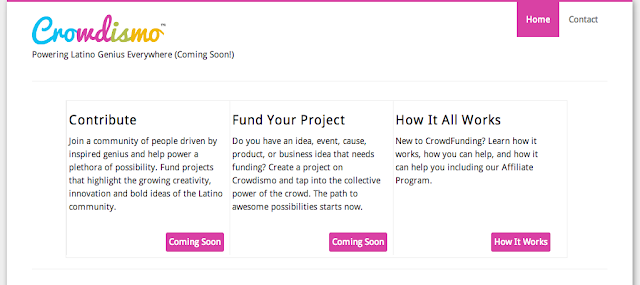
Crowdismo is a disruptive platform aimed at powering creativity and innovation within the Latino community through crowdfunding. A digital destination and site for individuals to join a groundswell of people driven by inspired genius and help power the prolific. Our goal is to eliminate barriers to entry for gente with bold ideas. By tapping into the power of the crowd, Crowdismo connects you to awesome possibilities in the form of funding.
How it works:
Age Factor
Overall, those between the ages of 25 and 34 are most likely to make investment decisions via crowdfunding platforms. The median age of Latinos is 27.6 making them the youngest demographic in the U.S. and perfectly aligned to adopt crowdfunding as a means of powering projects across a wide array of arenas including: Education, Technology, Social Impact, and Entrepreneurship to name a few.
Explosive Growth
"...the unassailable fact is that Latino-owned businesses in the United States are growing at a blistering pace." Latinos are three-times more likely to start businesses than the general population. Nielsen's State of the Hispanic Consumer report offers additional insights into the reach and growth of Latinos in America.
Philanthropic
Looking at Experian Simmons data, we know 47% of U.S. Hispanics donated to a charity or philanthropic organization in the last 12 months (Experian Simmons, Fall 2011 NHCS Adult Survey).
It's imperative that we foster a community of synergy and build both intellectual and financial capital driven by access to powerful economic resources that will enable continued momentum throughout the Latinosphere in the U.S. Crowdfunding levels the playing field in an arena where only 1% of VC money goes to African Americans and Latinos.
We're on the cusp of a unique opportunity to take investment and new venture priority to another level and Crowdismo is targeted at leading the charge in innovation funding, idea powering, and community impact.
Crowdismo coming soon 2013! Sign up for early access. Or join Crowdismo on Facebook.

How it works:
- Pitch your project to an online community of early adopters and believers.
- Incentivize backers to pledge to your project with unique rewards.
- Hit project’s funding goal and get one step closer to activating the incredible.
Age Factor
Overall, those between the ages of 25 and 34 are most likely to make investment decisions via crowdfunding platforms. The median age of Latinos is 27.6 making them the youngest demographic in the U.S. and perfectly aligned to adopt crowdfunding as a means of powering projects across a wide array of arenas including: Education, Technology, Social Impact, and Entrepreneurship to name a few.
Explosive Growth
"...the unassailable fact is that Latino-owned businesses in the United States are growing at a blistering pace." Latinos are three-times more likely to start businesses than the general population. Nielsen's State of the Hispanic Consumer report offers additional insights into the reach and growth of Latinos in America.
Philanthropic
Looking at Experian Simmons data, we know 47% of U.S. Hispanics donated to a charity or philanthropic organization in the last 12 months (Experian Simmons, Fall 2011 NHCS Adult Survey).
According to a recent post in Forbes online, "Sixty-nine percent of Hispanic respondents ranked “help people who are in need” as No. 5 on their list of aspirations compared to only 27% of non-Hispanics, who ranked this at No. 14. They want to make a difference, and if you can facilitate that, you can endear your brand to these consumers."
It's imperative that we foster a community of synergy and build both intellectual and financial capital driven by access to powerful economic resources that will enable continued momentum throughout the Latinosphere in the U.S. Crowdfunding levels the playing field in an arena where only 1% of VC money goes to African Americans and Latinos.
We're on the cusp of a unique opportunity to take investment and new venture priority to another level and Crowdismo is targeted at leading the charge in innovation funding, idea powering, and community impact.
Crowdismo coming soon 2013! Sign up for early access. Or join Crowdismo on Facebook.
Wednesday, January 2, 2013
Latino Startups to Watch in 2013
"Create a prototype and get it to market as soon as you can. Ignore the naysayers. Revise fast." - Guy Kawasaki, Author of The Art of the Start.Perhaps it's this kind of a mindset that has led to a rising surge in entrepreneurship activity among Latinos. Hispanic entrepreneurs opened twice as many businesses as the national average in the 2000s, according to U.S. Census data. What's even more exciting is a trend where Latin American-born entrepreneurs, a previously invisible cohort, are beginning to make their presence known in Silicon Valley. Bet you didn't know that the co-founder of Instagram, Mike Krieger, is Brazilian. But where is the rest of the startup collective and what problems are they trying to solve?
To no surprise, Latino startups are rising in number and influence. Part of this explosive growth is fueled by Latinas who are vital to startup success. In fact, there are numerous success stories of Latinas who are making some big strides in entrepreneurship activity and blurring the lines of gender difference building huge momentum. And we love it.
Following are a few Latino(a) startups of note that we feel are sure to continue the upward trend in entrepreneurship activity in 2013 and fuel real impact across a multitude of industry verticals.
Parranda.org

A new online/offline community opened its virtual doors this morning with an invitation to all Puerto Ricans to help remap "The Greater Puerto Rico." Parranda.org -- which takes its name from the popular Puerto Rican Winter holiday pastime -- aims to "remap, remake, and remobilize the Greater Puerto Rico" through a series of coordinated efforts involving both people on the island and people in the Puerto Rican diaspora (i.e., people who have moved to the mainland US and other countries). The first focus for Parranda.org is a global project where the community will draw an interactive map of where Puerto Ricans live today. A first look at this map will be published in January.
Dubalu

Dubalu (Pronounced DOO-bah-loo) is the world’s first Social Network Marketing Site—a unique, exciting and valuable new concept in networking that combines the most popular features and benefits of the Internet’s top-ranked social and marketing destinations in one. What's interesting about this site is the fact that they've amassed a huge social media following in a matter of months. It will be exciting to see if Dubalu can capitalize on a subscription based model fueled by the power of social media.
StudentMentor.org
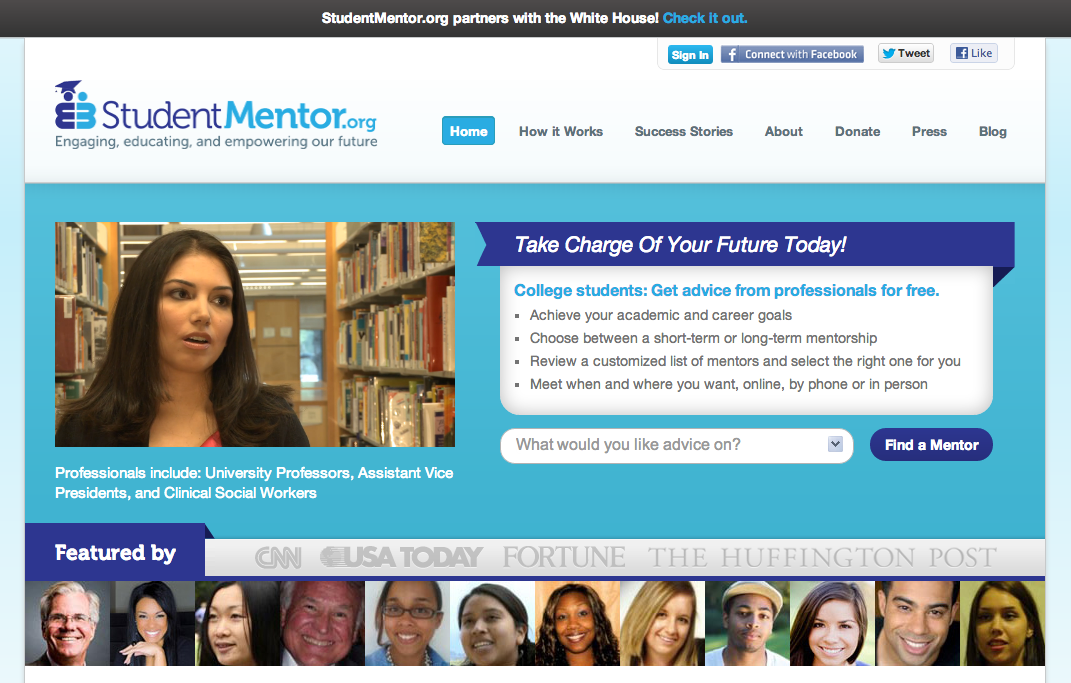
An innovative national mentoring program based on a pioneering technology platform where college students can conveniently find and collaborate with mentors from diverse industries and professions to achieve their academic and career goals. StudentMentor.org has amassed an audience of students from 1,000+ colleges and counting including a network professionals from all industries contributing 40,000+ years of experience is part of the reason the site has been able to partner with none other than the White House.
Latino Startup Alliance

Based out of San Francisco, the Latino Startup Alliance is leading the charge in new ideas. The mission of the LSA is to encourage the inspiration and cultivation of Latino led technology startup ventures by providing a strong support network of fellow Latino entrepreneurs, investors, innovators, and business owners. A hub of startup activity and leadership sure to thrive in 2013 and increase the amount of Latino led technology innovation not only in Silicon Valley but across the United States.
The breadth of Latino startup activity is fuel for the visionary and a symbol of opportunity. If you have an idea, forget about fear and move fast because the crowd is waiting, watching, and looking for opportunities to fuel innovation and power genius throughout the U.S. Here's to continued momentum and positive iteration in 2013!
Friday, October 26, 2012
The Muy Interesante Future of Latino Entrepreneurship
There's no denying it, minority entrepreneurship matters in the United States. And for the budding Latino business entrepreneur, embracing technology and social media is invaluable. When it comes to the future of Latino entrepreneurship, why not start them young with an innovative approach similar to SparkAmerica.us?
Better yet, why not learn from some of the most dynamic Latino entrepreneurs that are building interesting things and amassing a growing user base while developing innovative technologies.
Say hello to Interesante.

The place to discover and share Latino interests. Interesante is a unique startup in beta focused on immersive cultural shear-ability and fueling diaspora-driven commerce. It's a gateway to cultural interests in its most beautiful visual form. Interesante places a special focus on the deeper cultural nuances of social engagement commanding a user base representing over 41 countries including Argentina, the United States, Spain, Mexico, Colombia, Ecuador, Chile, Venezuela, Brazil, and Peru.

Interesante is the brain child of Rebecca Padnos Altamirano (CEO) who gracefully assembled a team of approximately ten individuals, largely based in Argentina. These professionals are led by Antonio Altamirano (COO), Pablo Gamba (CTO), Claudio Cossio (VP Marketing), and Leandro Henflen (Design). Antonio is also the co-founder of virtual postcard startup Dabble.
Our founder Jose Huitron, recently caught up with Antonio, one of the most prolific Latino entrepreneurs amassing a cross-national track record of unique startup activity.
Antonio arrived in the U.S. 13 years ago armed with a keen focus on the huge potential and possibility of entrepreneurship. "I needed to prepare myself to be the best I can be and be ready to launch and test my ideas in the real world. Not only by building a company but helping the community as a whole and in particular, the Latino community," said Antonio.
The allure of possibility combined with a passion for action has fueled an environment where Latinos are the future of entrepreneurship in the U.S. Latinos are now trendsetters, cultural icons, successful business people and are at the core of the American cultural fabric. However, no tool has placed the Latino consumer at the top of their pecking order. Enter Interesante.
"There are huge highs and massive lows. You go from a place where you feel you're going to conquer the world and some days it looks as if you are climbing Everest. Preparation is paramount to succeed in this environment. The fluctuation is so big you have to be careful, but that is what makes it fun." said Antonio.
"Other tools were born out of necessity for a particular need. Facebook doesn't even provide Open Graph in Spanish. We want to be the largest database of interests that are Latino based in the world.
For many budding Latino(a) entrepreneurs, the road to real impact requires a focus on identifying, enabling, and mobilizing champions and committed advisors. A real challenge lies in trying to bridge the gap between Latinos who want to do something big and Latinos in the U.S. who can invest and nurture the nascent Latino startup community. Interesante is a benchmark in how to bridge this gap and move inspired Latinos with bold ideas to a place where passion meets action.
Rebecca and her team at Interesante are a legitimate force to be reckoned with. They stand as a great example of an innovative startup that is built for Latinos by Latinos.
For Antonio and his team, Interesante is much more than a hub of diaspora-driven commerce. It is also a rallying cry for Latino entrepreneurs to step into the arena of innovation with confidence and a belief that your identity fuels the prolific.
The future of Latino entrepreneurship is already here.
Better yet, why not learn from some of the most dynamic Latino entrepreneurs that are building interesting things and amassing a growing user base while developing innovative technologies.
Say hello to Interesante.
The place to discover and share Latino interests. Interesante is a unique startup in beta focused on immersive cultural shear-ability and fueling diaspora-driven commerce. It's a gateway to cultural interests in its most beautiful visual form. Interesante places a special focus on the deeper cultural nuances of social engagement commanding a user base representing over 41 countries including Argentina, the United States, Spain, Mexico, Colombia, Ecuador, Chile, Venezuela, Brazil, and Peru.

Interesante is the brain child of Rebecca Padnos Altamirano (CEO) who gracefully assembled a team of approximately ten individuals, largely based in Argentina. These professionals are led by Antonio Altamirano (COO), Pablo Gamba (CTO), Claudio Cossio (VP Marketing), and Leandro Henflen (Design). Antonio is also the co-founder of virtual postcard startup Dabble.
Our founder Jose Huitron, recently caught up with Antonio, one of the most prolific Latino entrepreneurs amassing a cross-national track record of unique startup activity.
Antonio arrived in the U.S. 13 years ago armed with a keen focus on the huge potential and possibility of entrepreneurship. "I needed to prepare myself to be the best I can be and be ready to launch and test my ideas in the real world. Not only by building a company but helping the community as a whole and in particular, the Latino community," said Antonio.
The allure of possibility combined with a passion for action has fueled an environment where Latinos are the future of entrepreneurship in the U.S. Latinos are now trendsetters, cultural icons, successful business people and are at the core of the American cultural fabric. However, no tool has placed the Latino consumer at the top of their pecking order. Enter Interesante.
"There are huge highs and massive lows. You go from a place where you feel you're going to conquer the world and some days it looks as if you are climbing Everest. Preparation is paramount to succeed in this environment. The fluctuation is so big you have to be careful, but that is what makes it fun." said Antonio.
"Other tools were born out of necessity for a particular need. Facebook doesn't even provide Open Graph in Spanish. We want to be the largest database of interests that are Latino based in the world.
For many budding Latino(a) entrepreneurs, the road to real impact requires a focus on identifying, enabling, and mobilizing champions and committed advisors. A real challenge lies in trying to bridge the gap between Latinos who want to do something big and Latinos in the U.S. who can invest and nurture the nascent Latino startup community. Interesante is a benchmark in how to bridge this gap and move inspired Latinos with bold ideas to a place where passion meets action.
Rebecca and her team at Interesante are a legitimate force to be reckoned with. They stand as a great example of an innovative startup that is built for Latinos by Latinos.
For Antonio and his team, Interesante is much more than a hub of diaspora-driven commerce. It is also a rallying cry for Latino entrepreneurs to step into the arena of innovation with confidence and a belief that your identity fuels the prolific.
The future of Latino entrepreneurship is already here.
Friday, July 13, 2012
10 More Must Follow Prolific Latinos on Twitter

"Mend your speech a little, lest it may mar your fortunes." - Shakespeare, King Lear
1. Chiqui Cartagena
Chiqui Cartagena is a seasoned journalist and a Hispanic market guru. She is the author of LATINO BOOM and has done ground-breaking work in Hispanic media.
2. Melanie Edwards
Working mom blogging since 2006 on parenting & life balance. She is also the Owner of Ella Media. Not to mention she was part of a select few of Latina bloggers who had the awesome opportunity to chat with Michelle Obama!
3. Andy Checo
PR pro, US Hispanic market insider, and social media enthusiast. He is the founder of #hprchat (Hispanic PR Chat) a fabulous resource for all things related to connecting more effectively with the burgeoning Latino demographic.
4. Eliana Murillo
Hispanic Community Outreach Lead at Google and the CMO for Tequila Alquimia. She is a Harvard grad and an advocate for social change. A direct connection for Latinos into the world of Google technology.
5. Eva Smith
A prolific entrepreneur, foodie, innovative engineer and the CoFounder of Latina Mom Blogs (@LatinaMomBlogs. Her focus is on education, startups, advocacy, and technology. Her tweets bring a bicultural and bilingual flavor to the digital landscape. She also tweets some of the most stimulating visual images of food you've ever seen! Foodies unite!
6. Miguel Corona
Passionate about helping organizations tap the Latino workforce. He is an educator, researcher, mentor, entrepreneur, father, and one of the best resources for insights on how to understand, reach, and develop Latino talent.
7. Engel Fonseca
Futurist blazing trails from Miami to Mexico and back. He is a public speaker, marketing professor, techpreneur, and the Founder of Neurona Digital and the man behind Hispanomics.info, a research platform for finding the best data about the U.S. Hispanic Digital Advertising Market.
8. Ariel Coro
A technology expert and the author of El Salto. His passion for education and clear vision of the future has helped ordinary people embrace technology and capitalize on its limitless benefits. He is the founder of Tutecnologia.com and the man behind Tecnifícate.
9. Aurelia Flores
Founder and Host of PowerfulLatinas.com a powerhouse of wisdom focused on leadership and empowerment. Her work fosters a community of Latinas re-imagining culture together by blending a mix of personal empowerment messages with community involvement and current, relevant information for the modern Latina woman.
10. Claudia Havi Goffan
A true motivator and recognized expert in Latino Marketing by CNN en Español. She has been named one of the Top 48 PR professionals by the American Express Open Forum. Her stream is rich in valuable information for understanding and connecting with Latinos. She is the Founder of Target Latino. Her energy is contagious.
We could literally be here all day showcasing some of the best and brightest but we understand that you have work to do so we'll save it for another post. Stay tuned for follow up posts on additional game changers, motivators, influencers, and genuinely friendly prolific Latinos(as) doing big things on Twitter and beyond.
Subscribe to:
Posts (Atom)